
The Heartworm Pill Danger Your Vet Won’t Tell You: Is Your Prevention Killing Your Pet?
For decades, pet owners have followed a ritual as rhythmic as the seasons: once a month, we press a flavored chewable into our dog’s throat or hide a pill in a glob of peanut butter. We do it out of love. We do it because we are told that heartworms are a death sentence and that this little pill is the only shield standing between our best friends and a gruesome end.
But what if that shield is actually a slow-acting poison?
In recent years, a growing movement of holistic veterinarians, researchers, and devastated pet owners has begun to pull back the curtain on the multi-billion-dollar heartworm prevention industry. From neurological tremors and life-threatening seizures to the rising tide of “super heartworms” that are resistant to the very drugs we use, the “Heartworm Pill” is no longer the simple safety net it was once marketed to be.
This is the information your veterinarian—bound by pharmaceutical-sponsored education and strict clinical protocols—is often unable or unwilling to share.
1. The Pharmaceutical Illusion: Prevention vs. Poison
The first thing every pet owner needs to understand is a semantic lie: Heartworm “preventatives” do not actually prevent heartworms.
In medical terms, a preventative usually implies a vaccine or a barrier that stops an infection from occurring. Heartworm pills do neither. Instead, these medications are low-dose insecticides designed to kill heartworm larvae (microfilariae) that are already present in your dog’s bloodstream.
When your dog is bitten by an infected mosquito, the larvae enter the tissue. The “preventative” you give 30 days later is actually a retrospective treatment meant to poison those larvae before they reach the heart and lungs. You are essentially putting your dog through a mini-chemotherapy session every 30 days to kill a parasite that might not even be there.
The Chemical Cocktail
The active ingredients in these pills—Ivermectin, Milbemycin Oxime, Moxidectin, and Selamectin—are powerful neurotoxins. Their job is to paralyze the nervous system of the parasite. The logic is that the dose is low enough that it won’t harm the mammal (your dog), but high enough to kill the invertebrate (the worm).
However, biology is rarely that neat. For many dogs, the “low dose” is still high enough to cross the blood-brain barrier, leading to a cascade of systemic issues.
2. The FDA Warnings They Don’t Post in the Lobby
In 2018, the FDA issued a chilling fact sheet regarding several popular flea, tick, and heartworm medications. While much of the focus was on the Isoxazoline class (used in products like NexGard and Bravecto), the broader implications for chemical pest control in pets became clear.
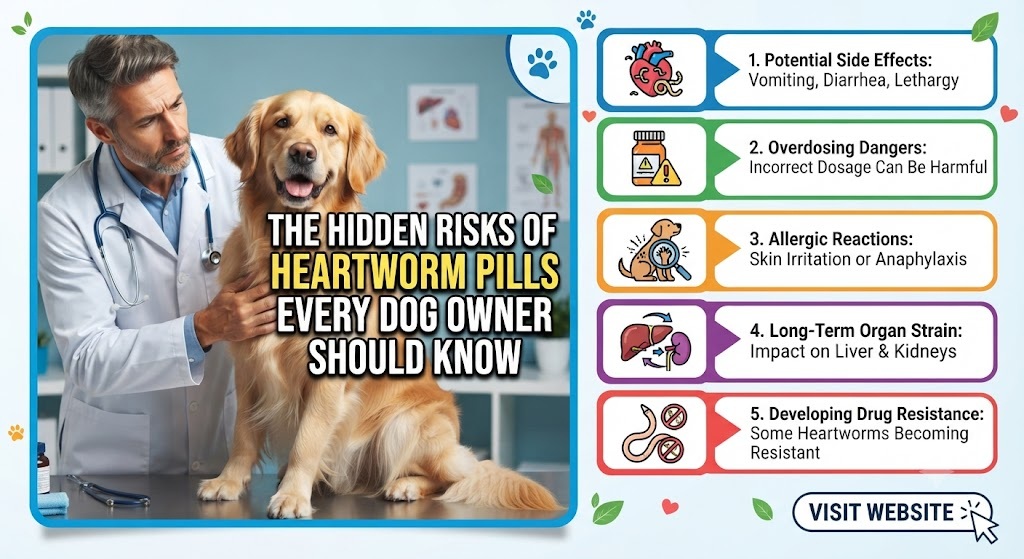
The side effects reported to the FDA and various veterinary adverse event reporting systems include:
- Neurological Distress: Ataxia (loss of coordination), muscle tremors, and full-blown seizures.
- Digestive Ruin: Chronic diarrhea, vomiting, and “leaky gut” syndrome, which can lead to lifelong food allergies.
- Lethargy and Depression: A noticeable change in personality where a vibrant dog becomes “dull” or sedentary for 48–72 hours after the pill.
- Skin Issues: Hot spots, hives, and chronic itching that vets often treat with more chemicals (like Apoquel), creating a lucrative cycle of “symptom management.”
The most frightening aspect? These chemicals are cumulative. Because they are designed to stay in the system to provide “protection,” they tax the liver and kidneys, the body’s primary filtration systems. Over five, seven, or ten years, this chronic toxicity can manifest as organ failure or cancer—long after the owner has forgotten about the monthly pill.
3. The “MDR1” Gene: A Genetic Landmine
Some dogs are genetically predisposed to be killed or severely injured by heartworm pills. This is known as the MDR1 (Multi-Drug Resistance) gene mutation.
Dogs with this mutation lack a specific protein that pumps toxins out of the brain. For an MDR1-positive dog, a standard dose of Ivermectin isn’t just a pill; it’s a direct neurotoxic assault.
Commonly Affected Breeds Include:
- Collies and Border Collies
- Australian Shepherds
- Old English Sheepdogs
- Shetland Sheepdogs (Shelties)
- German Shepherds
- Whippets
Many vets do not require an MDR1 test before prescribing these medications. They rely on “averages,” but if your dog is the one-in-a-hundred with a sensitivity, the results can be fatal.
4. The Rise of Drug-Resistant “Super Heartworms”
Perhaps the most alarming “danger” is that the pills are starting to fail. For decades, we have over-medicated the canine population, and nature has done what it always does: it adapted.
In the Mississippi Delta and across the Southeast United States, researchers have identified strains of heartworms that are completely resistant to all major FDA-approved preventatives. Despite being on a monthly “preventative” schedule, dogs are still testing positive for adult heartworms.
The pharmaceutical response? Often, they recommend increasing the dose or switching to a more potent, long-acting injectable like ProHeart. This is like trying to put out a fire by pouring more gasoline on it. By using higher concentrations of chemicals, we are simply breeding more resilient parasites while further compromising the dog’s immune system.
5. The Geography of Greed: Is Your Dog at Risk?
One of the biggest “secrets” in the veterinary industry is the push for year-round prevention. Regardless of whether you live in the frozen tundra of Minnesota or the swamps of Florida, the recommendation is the same: one pill every 30 days, 12 months a year.
This is scientifically unnecessary for a large portion of the population.
Heartworms require very specific environmental conditions to develop. They cannot be transmitted directly from dog to dog; they must pass through a mosquito. But more importantly, the heartworm larvae inside the mosquito cannot reach the infective stage unless the temperature remains above 57°F (14°C) day and night for approximately 10 to 14 days.
If the temperature drops below that threshold for even a few hours, the development cycle of the larvae stops.
In many Northern states, the window of actual heartworm risk is only 3 to 4 months. Yet, pet owners are told to medicate for 12 months. Why?
- Compliance: Vets fear owners will forget to restart the medication.
- Revenue: Selling 12 pills instead of 4 significantly increases the bottom line for both the clinic and the manufacturer.
6. The Pharmaceutical Funding of Veterinary Medicine
To understand why your vet might be reluctant to discuss these dangers, you have to look at the education system.
Most veterinary schools receive significant funding from companies like Zoetis, Merck, and Boehringer Ingelheim. These companies provide the textbooks, sponsor the seminars, and fund the research. From day one, vet students are taught that “gold standard care” equals pharmaceutical intervention.
Furthermore, many veterinary clinics derive a massive percentage of their annual profit from the sale of flea, tick, and heartworm medications. If a vet were to tell you that you only need three months of protection—or that you could use a natural alternative—they would be actively sabotaging their own business model.
7. The Natural Defense: A Healthier Approach
If you decide the risk of monthly chemicals is too high, what are your options? You cannot simply do nothing—heartworms are a real threat in many areas. The key is to shift from “chemical warfare” to “biological defense.”
A. The “Testing” Protocol
Instead of poisoning your dog “just in case,” many holistic pet owners opt for frequent testing. In high-risk areas, testing for heartworms every 4 months (instead of every 12) allows you to catch any potential infection while the worms are still in the larval stage, where they can be treated with much milder methods.
B. Mosquito Management
The best way to prevent heartworms is to prevent the mosquito bite.
- Essential Oil Sprays: Using pet-safe blends of lemongrass, cedar, or neem oil before your dog goes outside.
- Environment: Eliminate standing water in your yard and keep your lawn mowed short.
- Timing: Avoid walking your dog at dawn and dusk when mosquito activity is at its peak.
C. Strengthening the Host
A healthy dog with a robust immune system is a poor host for parasites. Research suggests that dogs fed a fresh, species-appropriate raw or gently cooked diet have stronger immune responses. Heartworms thrive in bodies that are inflamed and nutritionally compromised. By feeding high-quality proteins and avoiding “kibble” filled with starch and fillers, you make your dog’s blood less “inviting” to invaders.
D. Herbal Alternatives
There are several herbal protocols, such as those involving Black Walnut, Wormwood, and Neem, that have been used for centuries to control internal parasites. While these require more diligence and knowledge than a once-a-month pill, they do not carry the risk of neurological damage.
8. Questions to Ask Your Vet (The “Litmus Test”)
If you want to know where your vet stands, ask these four questions. Their answers will tell you if they are prioritizing your dog’s long-term health or the clinic’s protocol:
- “Can we run an MDR1 genetic test before starting this medication?” (If they say it’s unnecessary, they aren’t considering your dog’s unique genetics.)
- “Based on local temperature charts, do I really need to give this in January and February?” (If they insist on year-round in a freezing climate, they are following a sales script.)
- “What is the clinic’s procedure for reporting an adverse drug reaction to the manufacturer?” (If they don’t have one, they likely attribute side effects to “other causes.”)
- “Can we do a Heartworm 4DX test every six months instead of a monthly pill?”
9. Case Studies: The Faces of the “Rare” Side Effects
The industry calls them “rare,” but to the families who lose a pet, the statistics don’t matter.
- Case 1: The “Dull” Labrador. A 4-year-old Lab started showing signs of lethargy every month like clockwork. After three days, he’d return to normal. The owner was told it was “just a coincidence.” By age 6, the dog had developed idiopathic epilepsy. Once the heartworm pill was discontinued, the frequency of his seizures dropped by 80%.
- Case 2: The Border Collie Disaster. A healthy Border Collie was given a standard dose of a common “all-in-one” heartworm and flea chewable. Within six hours, the dog was in a state of status epilepticus. It turns out the dog was MDR1 positive, a fact never checked by the vet.
10. Conclusion: Reclaiming Your Role as an Advocate
Your veterinarian is a medical professional, but you are your dog’s guardian. You are the only one who sees them every day, who knows the slight tilt of their head or the change in their energy levels.
The danger of the heartworm pill isn’t just the chemicals inside it; it’s the “set it and forget it” mentality it fosters. We have been conditioned to believe that health comes from a bottle, when in reality, health comes from a strong immune system, a clean environment, and a cautious approach to toxins.
Don’t let the fear-based marketing of “The Heartworm Death Sentence” bully you into making a decision that could compromise your pet’s neurological or organ health. Do the research, check the temperature charts for your area, consider the genetic makeup of your breed, and remember: You have the right to say no to any medication you feel is unsafe.
True heartworm prevention isn’t found in a flavored chewable. It’s found in a holistic lifestyle that protects your pet from the inside out.
Quick Reference: Heartworm Risk Map (The 57°F Rule)
- High Risk (10–12 months): Gulf Coast, Florida, Southern California, Hawaii.
- Moderate Risk (6–8 months): Mid-Atlantic, Midwest, Northern California.
- Low Risk (3–5 months): Pacific Northwest, New England, Mountain States.
- Zero Risk: Sustained temperatures below freezing (Medication is 100% unnecessary during these months).
Disclaimer: This article is for informational purposes only and does not constitute veterinary medical advice. Always consult with a trusted professional, preferably a holistic or integrative veterinarian, before changing your pet’s medication protocol.