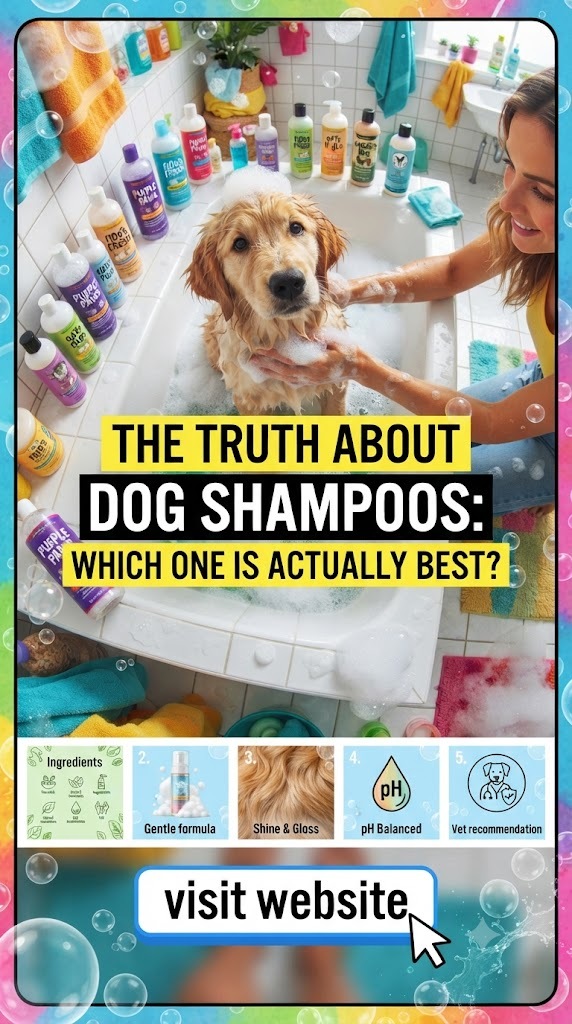
Dog Shampoo Guide: Top Picks for Every Coat, Skin Type, and Budget
Finding the perfect shampoo for your dog isn’t just about making them smell like a lavender field—it’s about dermatological health, coat integrity, and overall well-being. As pet parents, we often focus on the best food or the toughest toys, but the skin is a dog’s largest organ. Using the wrong product can lead to a cascade of issues, from minor itching to severe dermatitis and secondary infections.
In this comprehensive guide, we compare the top-rated dog shampoos on the market, dive into the science of canine skin, and help you navigate the confusing world of “natural” versus “medicated” formulas.
Why You Can’t Use Human Shampoo on Dogs
Before we dive into the reviews, we must address the most common mistake: grabbing the bottle of Head & Shoulders or Pantene from your own shower.
The primary reason is the pH balance. Human skin is acidic, typically hovering around a pH of 5.5. Most human shampoos are formulated to maintain this acidity. Dogs, however, have skin that is much more neutral to slightly alkaline, ranging from a pH of 6.2 to 7.5.
If you use human shampoo on a dog, you disrupt the acid mantle—a thin, protective layer on the skin. This disruption makes the dog’s skin a breeding ground for bacteria, parasites, and viruses. It also strips away the natural oils that keep the coat waterproof and shiny. Over time, this leads to dry, flaky skin and a dull, brittle coat.
Best Dog Shampoos Compared: At a Glance
| Category | Product Name | Key Benefit | Best For |
|---|---|---|---|
| Best Overall | Burt’s Bees Oatmeal Shampoo | Natural ingredients, affordable | Sensitive skin & regular use |
| Best for Itchy Skin | Earthbath Oatmeal & Aloe | Soap-free, deeply moisturizing | Allergies and dry skin |
| Best Medicated | Veterinary Formula Clinical Care | Antiseptic and antifungal | Fungal/Bacterial infections |
| Best for Puppies | Isle of Dogs Tearless Puppy | Gentle, pH balanced | Young pups with sensitive eyes |
| Best Deodorizer | Buddy Wash Lavender & Mint | Long-lasting scent | Dogs that love rolling in mud |
| Best Whitening | Chris Christensen White on White | Optical brighteners | Malteses, Poodles, Westies |
| Best Waterless | Wahl No-Rinse Foam | Easy cleanup, no water needed | Between baths/Senior dogs |
Deep Dive: Top 10 Dog Shampoos Reviewed
1. Best Overall: Burt’s Bees for Dogs Oatmeal Shampoo
Burt’s Bees has transitioned from a beloved human brand to a powerhouse in the pet care industry. Their Oatmeal Shampoo with Flour and Honey is a masterclass in simplicity.
- The Formula: It utilizes colloidal oat flour and honey to nourish the skin. It is 97% natural and free from sulfates and colorants.
- Pros: Extremely gentle, does not wash off topical flea and tick treatments, and provides a subtle, non-overpowering scent.
- Cons: Because it lacks heavy surfactants (sulfates), it doesn’t produce a massive lather, which can make it feel like you aren’t using enough.
- Verdict: Perfect for the average dog with no major skin issues who needs a reliable, safe, and effective wash.
2. Best for Itchy Skin & Allergies: Earthbath Oatmeal & Aloe
If your dog spends their day scratching or licking their paws, Earthbath is often the first recommendation from professional groomers.
- The Formula: This is a soap-free shampoo that combines 3% colloidal oatmeal with organic aloe vera.
- Pros: It is 100% biodegradable and cruelty-free. The soap-free nature ensures that it won’t sting if your dog has minor scratches or “hot spots.”
- Cons: It’s a bit more expensive than budget brands, but the concentration means a little goes a long way.
- Verdict: A “must-have” for dogs with seasonal allergies or those living in dry climates where skin becomes parched.
3. Best Medicated: Veterinary Formula Clinical Care Antiseptic & Antifungal
Sometimes, a “pretty smelling” shampoo isn’t enough. If your dog has red patches, a “yeasty” smell, or scaly skin, they likely need a medicated approach.
- The Formula: Contains Benzethonium Chloride (anti-bacterial) and Ketoconazole (anti-fungal). It also includes aloe vera and lanolin to soothe the skin during treatment.
- Pros: Highly effective at treating pyoderma, allergic dermatitis, and fungal infections.
- Cons: It is a chemical-heavy formula. It should only be used as directed (usually 2-3 times a week initially, then less frequently).
- Verdict: The gold standard for therapeutic bathing at home.
4. Best for Puppies: Isle of Dogs Tearless Puppy Shampoo
Puppies have skin that is even more sensitive than adult dogs, and they are notorious for wiggling, which often leads to shampoo getting in their eyes.
- The Formula: A sulfate-free and paraben-free blend with a signature “Cotton + Fresh Orchid” scent.
- Pros: Truly tearless. It cleanses without stripping the natural puppy oils that are vital for coat development.
- Cons: The scent is lovely but might be too strong for owners who prefer unscented products.
- Verdict: The best choice for a puppy’s first bath experience.
5. Best for Deodorizing: Buddy Wash Lavender & Mint
Some dogs just… smell. Whether it’s the “hound musk” or a penchant for rolling in things they shouldn’t, Buddy Wash is designed to tackle odors at the source.
- The Formula: A 2-in-1 shampoo and conditioner base made from coconut oil. It includes botanical extracts of lavender, mint, rosemary, and chamomile.
- Pros: The scent is sophisticated and lasts for days. The added conditioner makes the coat incredibly soft and easy to brush.
- Cons: Not ideal for dogs with extreme skin sensitivities due to the high concentration of botanical oils.
- Verdict: Great for long-haired breeds that need extra detangling and a scent refresh.
6. Best Whitening: Chris Christensen White on White
If you own a white dog, you know the struggle of “yellowing” or “staining” around the paws and hocks.
- The Formula: This is not a bleach. It is an optical intensifying treatment. It uses tiny pigment particles that sit on the hair shaft to reflect light and eliminate yellow tones.
- Pros: It works on all coat colors to enhance shine, but it’s legendary for making white dogs look “snow-white.”
- Cons: It requires a 10-minute “dwell time” (letting the shampoo sit on the dog) to be effective, which can be difficult with impatient dogs.
- Verdict: The “show dog” secret for a brilliant, bright coat.
7. Best Waterless/Dry Shampoo: Wahl No-Rinse Waterless Foam
Whether you’re traveling, have a dog that hates water, or just need to clean muddy paws after a walk, a waterless foam is a lifesaver.
- The Formula: Lavender and chamomile foam that you massage into the coat and towel off.
- Pros: No rinsing required. It’s perfect for senior dogs who might find standing in a tub stressful or painful.
- Cons: It’s a “surface clean.” It won’t remove deep-seated dirt or heavy oils as well as a traditional bath.
- Verdict: The ultimate convenience tool for busy pet owners.
Ingredients to Look For (and Those to Avoid)
Understanding the label is the best way to ensure your dog’s safety. Many products marketed as “natural” still contain harsh chemicals.
The Good Guys (Look for these):
- Colloidal Oatmeal: Acts as an anti-inflammatory and creates a protective barrier on the skin.
- Aloe Vera: Provides immediate cooling relief for irritated skin.
- Honey: A natural humectant that draws moisture into the skin.
- Vitamin E: Helps repair damaged skin and promotes a healthy, shiny coat.
- Coconut Oil: Natural antimicrobial and excellent moisturizer.
- Neem Oil: Great for naturally repelling pests and soothing insect bites.
The Bad Guys (Avoid these):
- Parabens: Used as preservatives but have been linked to hormonal disruptions.
- Sulfates (SLS/SLES): These are the foaming agents. They are often too harsh and strip the skin of essential oils.
- Artificial Fragrances/Dyes: These are the leading cause of allergic reactions in dogs. Look for “natural fragrances” or “essential oils.”
- Phthalates: Often used to make fragrances last longer; they are known endocrine disruptors.
- Formaldehyde Preservatives: Sometimes listed as DMDM hydantoin or diazolidinyl urea. These are known skin irritants.
How to Choose the Right Shampoo Based on Coat Type
Different coats have different requirements. A Siberian Husky’s thick double coat needs a different approach than a hairless Chinese Crested.
1. Short-Haired Breeds (Beagles, Labs, Boxers)
These dogs are prone to “doggy odor” because their skin oils sit closer to the surface.
- Recommendation: A deodorizing or deep-cleansing shampoo. Because their hair is short, you don’t need a heavy conditioner, but a light moisturizing shampoo will keep their skin from flaking.
2. Long-Haired/Silky Breeds (Yorkies, Shih Tzus, Afghans)
Their hair is similar to human hair and tangles easily.
- Recommendation: A 2-in-1 shampoo and conditioner or a separate high-quality conditioner. Look for ingredients like silk proteins or keratin to add weight and shine to the hair.
3. Double-Coated Breeds (Huskies, Shepherds, Goldens)
These dogs have a soft undercoat and a coarse outer coat. The challenge here is getting the shampoo through the water-resistant outer layer.
- Recommendation: A high-lather, clarifying shampoo. You may need a “dilution bottle” to mix the shampoo with water first, allowing it to penetrate the thick undercoat more effectively.
4. Wire-Haired Breeds (Terriers, Schnauzers)
You want to maintain the “crisp” texture of their coat. Softening it too much can actually make the coat look “blown out” and messy.
- Recommendation: A texture-enhancing shampoo. Avoid heavy oils and conditioners that might weigh the coat down.
5. Curly/Non-Shedding Breeds (Poodles, Doodles)
These coats trap dirt and dander, leading to matting.
- Recommendation: A moisturizing shampoo with detangling properties. Since these dogs are often bathed and groomed frequently, a very gentle, pH-balanced formula is essential.
The Step-by-Step Guide to the Perfect Dog Bath
Even the best shampoo won’t work if the bathing technique is flawed. Here is how the pros do it:
Step 1: Pre-Bath Brushing
Never put a matted dog in the water. Water acts like glue on mats, tightening them and making them nearly impossible to remove without clippers. Brush your dog thoroughly to remove loose fur and debris.
Step 2: The Temperature Check
Dog skin is more sensitive to heat than ours. Use lukewarm water—it should feel barely warm to your touch.
Step 3: Thorough Wetting
It takes time to get a dog’s coat fully saturated, especially double coats. Use a sprayer if possible, starting from the back and moving toward the neck. Save the head for last to minimize the dog’s urge to shake.
Step 4: The Dilution Trick
Professional groomers rarely apply shampoo directly from the bottle to the dog. Mix your shampoo with water in a separate squeeze bottle. This helps the shampoo spread evenly and makes it much easier to rinse out later.
Step 5: Massage (The “Dwell Time”)
Massage the shampoo into the skin for at least 5 minutes. If you are using a medicated or whitening shampoo, this “dwell time” is critical for the ingredients to work. Use a rubber curry brush to stimulate the skin and remove dead hair.
Step 6: Rinse, Rinse, and Rinse Again
This is the most important step. Dried shampoo residue is the #1 cause of post-bath itching. Rinse until the water runs completely clear and you no longer feel a “slick” sensation on the coat.
Step 7: Drying
Squeeze out excess water with your hands, then use a microfiber towel to pat (don’t rub) the dog dry. If you use a hair dryer, use the “cool” or “warm” setting—never “hot.”
Troubleshooting Common Skin Issues During Bath Time
My dog has “Hot Spots”
Hot spots (acute moist dermatitis) are red, weeping sores.
- Solution: Use a shampoo containing Chlorhexidine or Hydrocortisone. Avoid scrubbing the area; instead, gently dab the shampoo on and let it sit. Consult a vet if the spot is spreading.
My dog has “Dandruff”
Flaky skin can be caused by dry air, poor diet, or over-bathing.
- Solution: Switch to a Colloidal Oatmeal or Coconut Oil based shampoo. Reduce bathing frequency to once every 4–6 weeks.
My dog smells like “Fritos”
This “corn chip” smell is usually a sign of a yeast overgrowth, often found on the paws and ears.
- Solution: An Antifungal shampoo containing Ketoconazole. Make sure to thoroughly dry between the toes after the bath, as yeast thrives in moisture.
My dog has “Skunk Breath” (or was sprayed by a skunk)
Regular shampoo won’t touch skunk oil (thiol).
- Solution: Do not wet the dog first! Use a dedicated skunk-remover shampoo or a mixture of 1 quart 3% hydrogen peroxide, 1/4 cup baking soda, and 1 teaspoon liquid dish soap. Apply to dry fur, let sit for 10 minutes, then rinse.
Frequently Asked Questions (FAQ)
How often should I wash my dog?
For most dogs, once a month is sufficient. Over-bathing can strip the skin of natural oils. However, dogs with skin allergies may need weekly medicated baths, while indoor “low-activity” dogs might go 2–3 months between baths.
Is baby shampoo safe for dogs?
In a pinch, yes. Johnson’s Baby Shampoo is pH-neutral (around 7.0), which is closer to a dog’s pH than adult shampoo. However, it lacks the conditioning agents dogs need for their fur, so it shouldn’t be a permanent replacement.
Can I use Dawn dish soap on my dog?
Dawn is excellent for removing heavy grease or oil (and is used on wildlife after oil spills). It is also used to kill adult fleas. However, it is extremely drying. Only use it for emergencies or for a one-time flea treatment, followed by a moisturizing conditioner.
Why does my dog run around like crazy after a bath?
This is known as the FRAPs (Frenetic Random Activity Periods) or “the zoomies.” It’s a combination of relief that the bath is over, an attempt to dry off, and a desire to get their natural scent back by rubbing against furniture.
What should I do if my dog hates baths?
Make the bathroom a “happy place” with treats. Use a “Lick Mat” with peanut butter suctioned to the wall of the tub to keep them distracted. Gradually introduce water, starting with just the paws.
Conclusion: The Best Choice for Your Best Friend
Choosing the best shampoo for your dog isn’t about the prettiest packaging; it’s about matching the formula to your dog’s specific biological needs.
- For the everyday healthy dog, you can’t go wrong with Burt’s Bees Oatmeal Shampoo.
- If your dog is constantly scratching, reach for Earthbath Oatmeal & Aloe.
- If you are dealing with medical skin issues, Veterinary Formula Clinical Care is your best bet.
Remember, a healthy coat starts from the skin up. By investing in a high-quality, pH-balanced shampoo, you are preventing future vet visits and ensuring your dog feels as good as they look. Happy bathing!