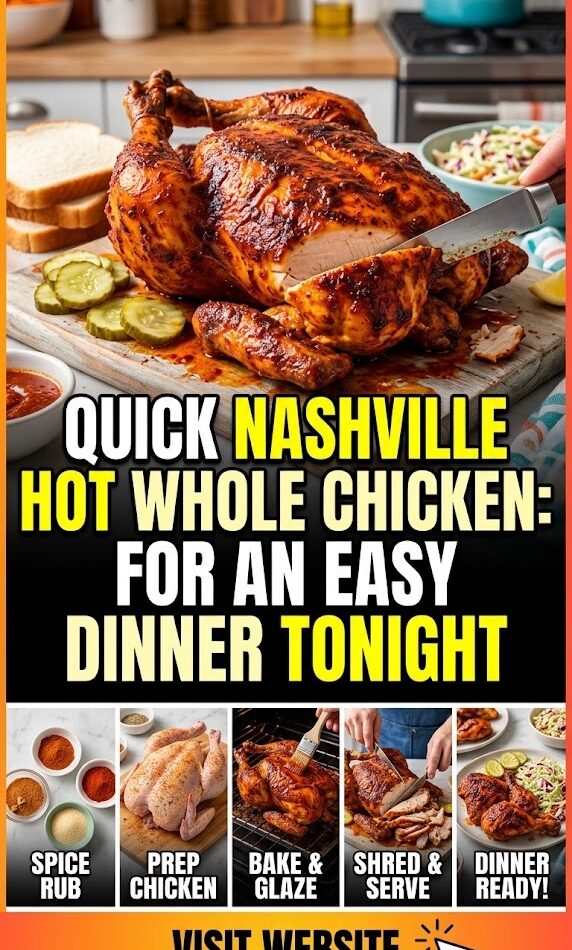
The culinary world is full of regional legends, but few have captured the collective imagination—and taste buds—quite like Nashville Hot Chicken. Traditionally served as fried bone-in pieces or tenders perched atop a slice of white bread with a crown of pickles, this spicy masterpiece is the pride of Music City. However, on a busy weeknight, deep-frying an entire bird can feel like a daunting task.
Enter the Quick Nashville Hot Whole Chicken. This recipe takes the soul-satisfying heat and savory depth of the original and reimagines it for the home oven. By utilizing the “spatchcock” method and a high-heat roasting technique, you can achieve that signature crispy skin and juicy meat in a fraction of the time. This isn’t just a meal; it’s a fiery, flavorful experience that turns a standard Tuesday night into a southern celebration.
The History and Soul of Nashville Hot Chicken
Before we dive into the kitchen, it is essential to understand the heritage of this dish. Legend has it that the recipe was born out of revenge in the 1930s. Thornton Prince, a known womanizer, returned home late one night to a disgruntled girlfriend who decided to punish him by dousing his favorite fried chicken in an ungodly amount of cayenne pepper. To her surprise, Thornton loved it. He loved it so much that he opened Prince’s Hot Chicken Shack, a Nashville institution that still stands today.
While the original is deep-fried, the flavor profile is what truly defines it: a base of garlic and onion, a hint of sweetness from brown sugar, and the unmistakable, creeping heat of high-quality cayenne pepper. Our whole chicken version pays homage to this balance while offering a healthier, less messy alternative that still hits every high note.
Why Roasting a Whole Chicken is Your Secret Weapon
Many home cooks shy away from roasting a whole chicken, fearing it will be dry or take hours to cook. In reality, the whole bird is the most economical and flavorful way to buy poultry.
- Uniform Flavor: When you roast the bird whole, the fat from the skin renders down, basting the meat in its own juices.
- Texture Contrast: You get the best of both worlds—tender white breast meat and rich, succulent dark leg and thigh meat.
- The “Spatchcock” Advantage: This is the game-changer. By removing the backbone and flattening the chicken, you increase the surface area exposed to heat. This results in a bird that cooks in 45 minutes rather than 90, with skin that is uniformly crispy.
The Ultimate Ingredient List
To achieve that authentic Nashville glow, you need high-quality ingredients. Don’t settle for generic chili powder; the specifics matter.
The Bird
- 1 Whole Chicken (4-5 lbs): Look for organic or pasture-raised if possible for the best fat-to-meat ratio.
The Dry Rub
- 2 Tablespoons Kosher Salt: Essential for drawing out moisture from the skin.
- 1 Tablespoon Cracked Black Pepper: For foundational heat.
- 1 Tablespoon Garlic Powder: For aromatic depth.
- 1 Tablespoon Onion Powder: To provide a savory backbone.
- 1 Teaspoon Smoked Paprika: Adds a subtle wood-fired flavor without the smoker.
The Nashville Hot Glaze (The Soul)
- 1/2 Cup Melted Lard or Unsalted Butter: Traditionalists use lard; butter provides a richer, creamy finish.
- 3-4 Tablespoons Cayenne Pepper: Adjust this based on your heat tolerance. Three is “Medium-Hot”; four is “Nashville Standard.”
- 1 Tablespoon Dark Brown Sugar: To caramelize the heat and add a “sticky” factor.
- 1 Teaspoon Chili Powder: For a complex red-pepper profile.
- 1/2 Teaspoon Sea Salt: To make the spices pop.
The Essentials for Serving
- Thick-cut White Bread: To soak up the spicy drippings.
- Dill Pickle Chips: To provide the necessary acid to cut through the fat and heat.
Step-by-Step Instructions: The Spatchcock Technique
The most intimidating part for beginners is spatchcocking (also known as butterflying), but it is surprisingly simple once you do it once.
Step 1: Prep the Bird
Remove the chicken from its packaging and pat it extremely dry with paper towels. Moisture is the enemy of crispy skin. Remove any giblets from the cavity.
Step 2: Remove the Backbone
Place the chicken breast-side down on a large cutting board. Using a pair of heavy-duty kitchen shears, cut along one side of the backbone from the tail to the neck. Repeat on the other side of the backbone. Remove the bone and save it in a freezer bag for future chicken stock.
Step 3: Flatten the Chicken
Flip the chicken over so it is breast-side up. Place your palms in the center of the breastbone and press down firmly. You should hear a “crack.” The chicken should now lie completely flat.
Step 4: The Dry Brine
Mix your dry rub ingredients (salt, pepper, garlic, onion, smoked paprika). Generously coat the chicken on both sides, including under the wings and legs. If you have time, let the seasoned bird sit uncovered in the fridge for 30 minutes. This allows the salt to penetrate the meat and dries out the skin further.
High-Heat Roasting for Maximum Crunch
Preheat your oven to 425°F (220°C). In the world of roast chicken, high heat is your friend. It flash-fries the skin in the oven’s convection while keeping the interior moist.
- The Pan Setup: Place the spatchcocked chicken on a wire rack set over a rimmed baking sheet. This allows hot air to circulate under the bird, ensuring the bottom doesn’t get soggy.
- Roasting: Slide the pan into the middle rack. Roast for approximately 40–50 minutes.
- The Temperature Check: The chicken is done when an instant-read thermometer inserted into the thickest part of the thigh (without hitting bone) reads 165°F (74°C).
Crafting the Signature Nashville Glaze
While the chicken is roasting, it’s time to prepare the glaze. This is what transforms a standard roast chicken into a Nashville Hot masterpiece.
In a small saucepan over low heat, melt your butter or lard. Once melted, whisk in the cayenne, brown sugar, chili powder, and sea salt. The key here is not to burn the spices but to bloom them in the fat. The mixture should look dark red and slightly thick.
Pro Tip: If you want an extra layer of flavor, take 2 tablespoons of the rendered chicken fat (schmaltz) from the bottom of your roasting pan and whisk it into the glaze before applying.
The Finish: Painting the Bird
Once the chicken comes out of the oven, let it rest for 10 minutes. This is crucial—if you cut it immediately, all the juices will run out, leaving you with dry meat.
After the rest, take a pastry brush and generously paint the hot oil mixture over the entire surface of the chicken. The heat from the bird will help the glaze soak into the crispy skin without making it soft. The result is a glistening, crimson bird that looks as intimidating as it tastes.
What to Serve with Nashville Hot Whole Chicken
Balance is everything when dealing with heat. You need sides that offer cooling relief or a starchy contrast.
1. The Traditional Base: White Bread and Pickles
Place the carved chicken directly onto slices of thick white bread. The bread acts as a sponge for the spicy oil and chicken juices. This “sopped bread” is often considered the best part of the meal. Serve with a mountain of cold, vinegary dill pickles.
2. Creamy Coleslaw
A vinegar and mayo-based slaw provides a refreshing crunch and a creamy element that coats the palate, protecting it from the cayenne’s burn.
3. Smoked Gouda Macaroni and Cheese
The richness of the cheese and the softness of the pasta are the perfect foil for the sharp spices of the chicken.
4. Honey-Glazed Carrots
The natural sweetness of roasted carrots complements the brown sugar in the Nashville glaze, creating a cohesive flavor profile across the plate.
Adjusting the Heat Scale
Not everyone has a “burn-your-face-off” tolerance. Here is how to adjust this recipe for your guests:
- Mild: 1 tablespoon of cayenne, increase brown sugar to 2 tablespoons.
- Medium: 2.5 tablespoons of cayenne.
- Nashville Hot: 4 tablespoons of cayenne + 1/2 teaspoon of red pepper flakes.
- “The Hurt”: 5 tablespoons of cayenne + a pinch of ghost pepper powder (Proceed with extreme caution).
The Science of Spicy: Why It Works
Nashville Hot Chicken isn’t just about pain; it’s about chemistry. The capsaicin in the cayenne pepper triggers the TRPV1 receptors on your tongue, which usually detect heat. This sends a signal to your brain that your mouth is “burning,” even though no physical damage is occurring. In response, your brain releases endorphins and dopamine—natural “feel-good” chemicals. This is why spicy food can be genuinely addictive.
By pairing the heat with fat (butter/lard) and sugar (brown sugar), you are managing the way the capsaicin interacts with your receptors. Fat helps dissolve the capsaicin, while sugar provides a sensory distraction, making the heat feel “rounded” rather than sharp.
Beverage Pairings: Putting Out the Fire
Choosing the right drink for Nashville Hot Chicken is an art form.
- The Beer Choice: A cold, crisp Lager or a Pilsner. You want something with high carbonation to scrub the spice off your tongue. Avoid high-IBU IPAs, as the bitterness can actually amplify the perception of heat.
- The Wine Choice: A chilled Riesling or Lambrusco. The slight sweetness and acidity of these wines provide a perfect counterpoint to the spice.
- The Non-Alcoholic Choice: Sweet Tea or a classic Lemonade. The sugar and acid are legendary for their ability to neutralize a cayenne kick.
Troubleshooting Common Issues
“My skin isn’t crispy!”
This usually happens because the chicken wasn’t dry enough before going into the oven, or the oven temperature was too low. Ensure you pat the bird dry and verify your oven temp with an external thermometer. Also, avoid covering the bird with foil during roasting, as this steams the skin.
“The spices tasted burnt.”
If the cayenne in the glaze is heated too long or at too high a temperature, it can turn bitter. Always whisk your spices into the fat at the very end and keep the heat on its lowest setting.
“The meat is dry.”
This is a classic sign of overcooking. Because a spatchcocked chicken cooks so much faster, it’s easy to leave it in too long. Start checking the temperature at the 35-minute mark.
Modern Twists on the Classic
While we love the traditional recipe, there is plenty of room for experimentation:
- Nashville Hot Honey: Add 2 tablespoons of honey to the glaze for a floral, sticky sweetness that is incredibly popular in modern Southern bistros.
- The Air Fryer Method: If you have a smaller chicken (around 3 lbs), you can air fry the spatchcocked bird at 375°F for about 30 minutes, flipping halfway through.
- The Smoky Version: Replace half of the cayenne with “Chipotle Powder” for a deeper, smokier heat that pairs excellently with BBQ sides.
Using Your Leftovers
If you happen to have leftovers (a rare occurrence!), this chicken is incredibly versatile for the next day’s lunch:
- Nashville Hot Chicken Salad: Chop the cold chicken and mix with mayo, celery, and extra pickles for the best sandwich filler you’ve ever had.
- Spicy Chicken Tacos: Shred the meat and serve in corn tortillas with lime-crema and pickled red onions.
- The “Ultimate” Mac and Cheese: Stir shredded Nashville Hot Chicken into your favorite macaroni and cheese for a spicy, cheesy bake.
Sustainable Sourcing: Why Quality Matters
When making a dish where the chicken is the undisputed star, sourcing matters. In the United States, look for labels like “Air-Chilled.” Most commercial chickens are chilled in water baths, which adds water weight and can lead to rubbery skin. Air-chilled chickens have more concentrated flavor and skin that crisps up beautifully.
Furthermore, supporting local farmers often means getting a bird that was processed more recently, resulting in a fresher taste that doesn’t require as much “masking” with seasoning.
Health Benefits of Cayenne Pepper
While we usually think of Nashville Hot Chicken as an indulgence, the star ingredient—cayenne—actually packs a nutritional punch. Capsaicin has been shown to:
- Boost Metabolism: The heat can slightly increase the number of calories your body burns.
- Improve Heart Health: It can help reduce blood pressure and clear deposits from arteries.
- Pain Relief: While it sounds counter-intuitive, capsaicin is used topically and internally to manage chronic pain by desensitizing pain receptors over time.
Conclusion: Bringing the Heat Home
The Quick Nashville Hot Whole Chicken is more than just a shortcut to a famous dish; it’s a masterclass in how simple techniques like spatchcocking and high-heat roasting can elevate basic ingredients. It’s a meal that commands attention at the dinner table—vibrant, aromatic, and unapologetically bold.
Whether you are a heat-seeker looking for your next fix or a home cook wanting to impress your family with a professional-grade roast, this recipe delivers. So, grab your kitchen shears, preheat that oven, and get ready for a taste of Nashville that you can enjoy right in your own kitchen tonight.
Don’t forget the pickles!
Frequently Asked Questions
Q: Can I use this recipe for chicken pieces instead of a whole chicken? A: Absolutely. If using bone-in thighs or breasts, reduce the cooking time to about 25–30 minutes at 425°F. The glaze process remains exactly the same.
Q: What if I don’t have kitchen shears? A: You can use a very sharp chef’s knife to cut out the backbone, but it requires more caution and force. Kitchen shears are the safest and easiest tool for the job.
Q: Is it okay to use olive oil instead of butter for the glaze? A: You can, but olive oil has a distinct flavor that can clash with the Southern spices. A neutral oil like avocado oil or grapeseed oil is a better substitute if you want to avoid dairy or lard.
Q: How do I store leftovers? A: Store in an airtight container in the refrigerator for up to 3 days. To maintain the crispiness of the skin, reheat in an oven or air fryer rather than a microwave.
Q: Can I make this in a slow cooker? A: We do not recommend a slow cooker for this specific recipe. The signature of Nashville Hot Chicken is the crispy skin, which can only be achieved through roasting or frying. A slow cooker will result in “pulled” spicy chicken—still delicious, but a completely different texture.